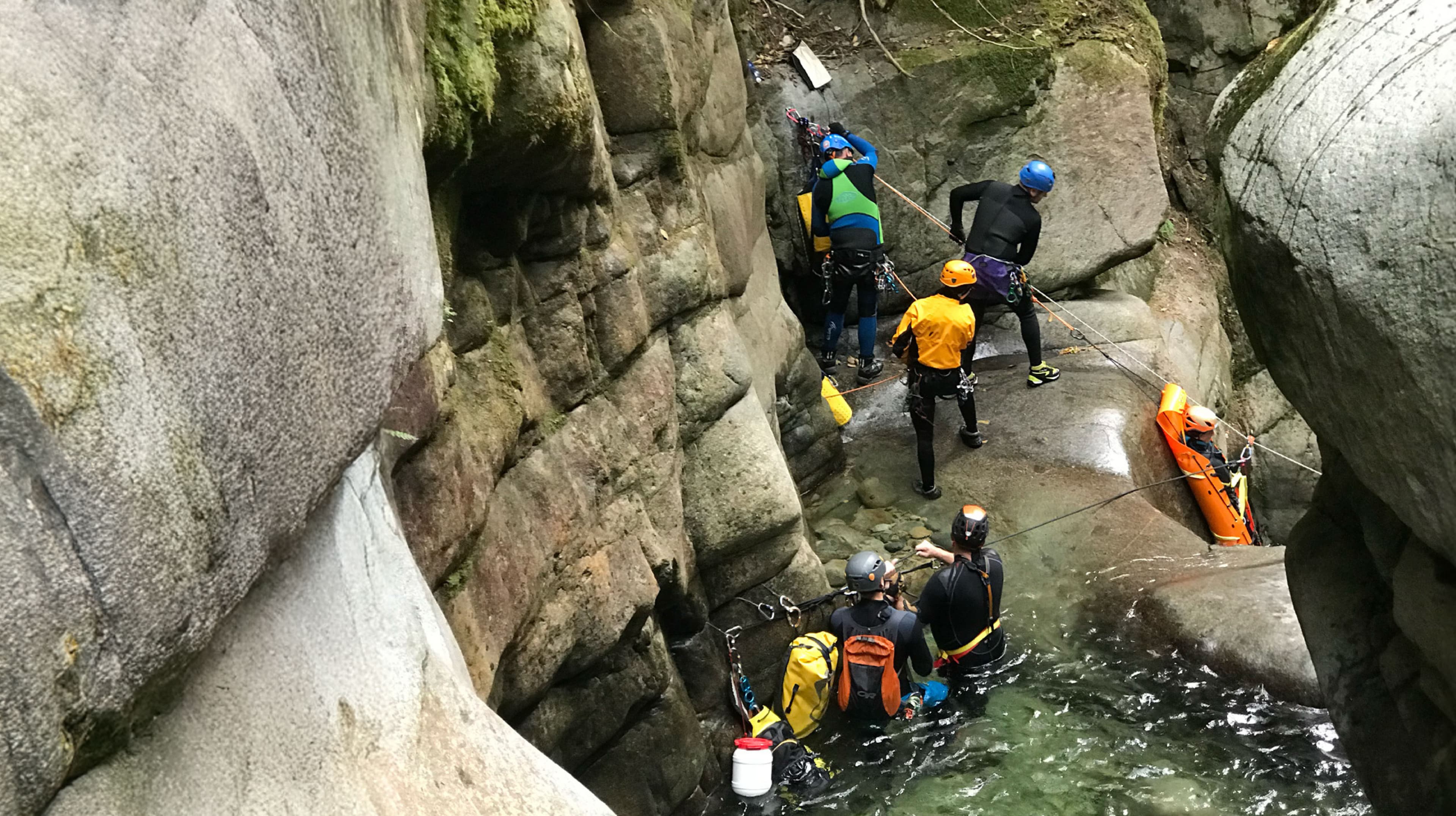
Although canyoning is not a formal search and rescue discipline, many of the technical skills overlap with swiftwater and rope rescue. In steep creek canyons and drainages, responders must manage moving water, confined terrain, and complex rope systems to reach and evacuate subjects safely.
Operations in these environments require specialized movement techniques, risk assessment, and coordinated rope and water rescue skills. Training in these areas enhances our ability to operate in narrow, water-exposed terrain where standard paths do not exist.
In the Lions Bay area, descending into steep canyons and creeks can be extremely hazardous. When lost or injured, it is often safer to stay in place and call for help rather than attempting downhill travel through dangerous gorges and watercourses.
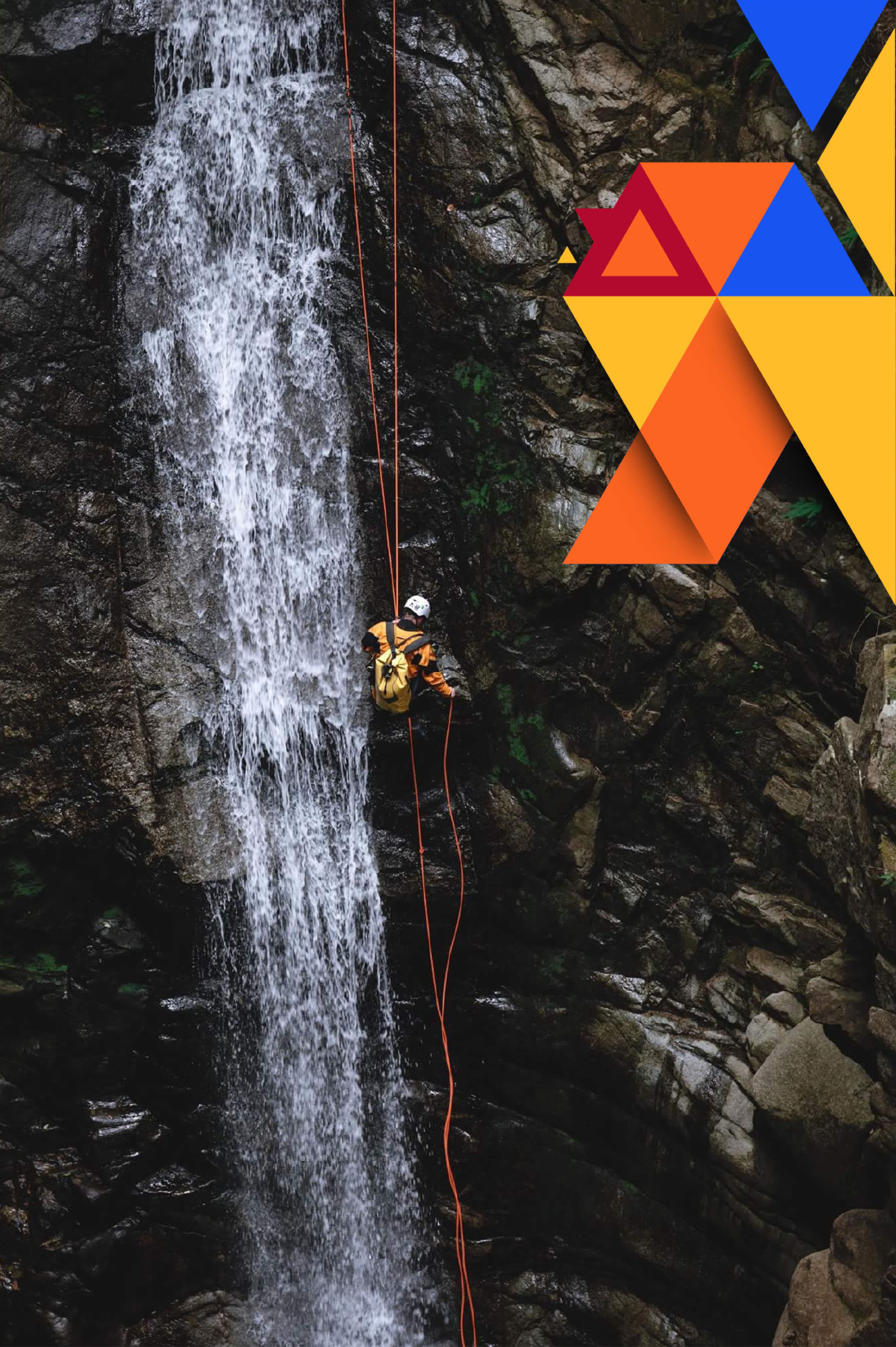

Although canyoning is not a formal search and rescue discipline, many of the technical skills overlap with swiftwater and rope rescue. In steep creek canyons and drainages, responders must manage moving water, confined terrain, and complex rope systems to reach and evacuate subjects safely.
Operations in these environments require specialized movement techniques, risk assessment, and coordinated rope and water rescue skills. Training in these areas enhances our ability to operate in narrow, water-exposed terrain where standard paths do not exist.
In the Lions Bay area, descending into steep canyons and creeks can be extremely hazardous. When lost or injured, it is often safer to stay in place and call for help rather than attempting downhill travel through dangerous gorges and watercourses.